





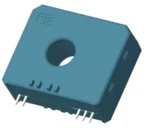
Weighing Indicator and Controller
Keli Sensing: Your Professional Weighing Indicator and Controller Manufacturer!
Ningbo Keli Sensing Technology Co., Ltd. ("Keli Sensing") was established in 1995, located in the Investment and Venture Park of Jiangbei District, Ningbo City. KELI sensing is one of the major leaders in the research and development, promotion, and application of the Internet of Things in global weighing industries. KELI sensing is also one of China's important weighing component manufacturing and sales companies and one of the pioneers of the industrial Internet of Things industry.

Our Advantages
Professional Product Development
While providing professional IoT software customization services, Keli Sensing has built a "weighing equipment data center", an IoT experimental center, and 26 laboratories.
Skilled Team
The company currently has more than 2,400 employees, including more than 900 employees at the Ningbo headquarters, forming a team of skilled technical personnel with strong R&D capabilities.
Strict Production Standards
Keli organizes the production of load cells and electronic weighing instruments in strict accordance with OIML international recommendations R60 and R76. Our products have obtained OIML certificates, NTEP certificates, GOST certificates, CE certificates, etc.
Strong Industry Influence
Currently, Keli Group owns 229 patents and 192 computer software copyrights. At the same time, Keli serves as the main unit in drafting relevant industry standards, group standards, etc.
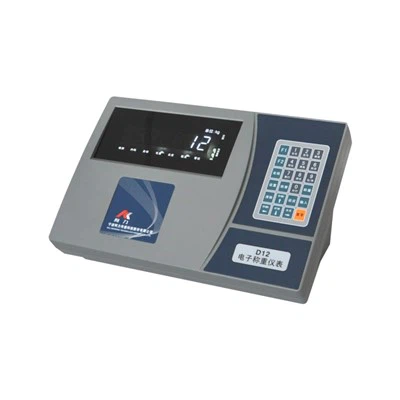
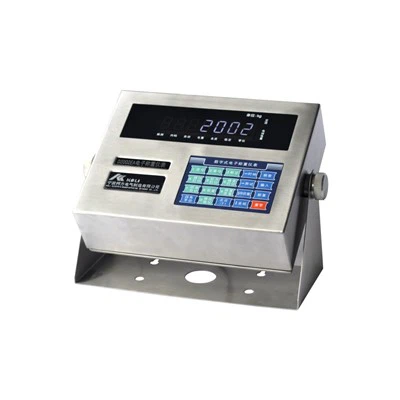

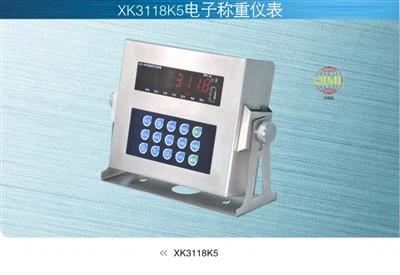



Introduction to Weighing Indicator and Controller
A scale indicator, also known as a weight indicator or a digital weight indicator, provides the weight data from a scale to the operator. Many indicators also serve as scale controllers, which tell a machine when and how to execute certain processes, such as dosing or filling, based on the reading from the scale.

Basic Indicator
It is a basic weight indicator that converts and displays load cell outputs as weights. These scales are equipped with all the basic functions required for platform scales etc. However, there are many options available in the market that can perform a range of applications such as check weighing and packers. Some more advanced functions may include normal batching, loss in weight sequence, batch time monitoring, mixing functions and sequencing functions, etc. In the case of scale repair, these indicators are easy to retrofit.
Universal Indicator
Universal indicators are often equipped with an Ethernet connection. These indicators are utilized in tank weighing, road weighbridges, platform scales, and retrofit applications. Universal weighing scale indicators have features like least count through the keypad, high-speed A/D conversion, selectable weighing capacity, and battery backup which is optional.
Batch Weighing Indicator
This scale also comes with features such as a selectable weighing range, optional real-time clock, easy replacement of indicator system and optional battery backup, etc.
Flameproof Weighing Indicator
In order to protect the scale from extreme heat and other harsh conditions, these scales are provided with cast aluminum casing. Its construction makes it suitable to be used in the vicinity of materials such as petroleum-based products or paints. These scales can easily withstand dangerous working conditions. Apart from sturdy construction, these scales are often provided with the main display, sub-display, and various weighing functions.
Check Weighing Indicators
These indicators are excellent to be used on platform scales and conveyors. The indicator displays a bar graph that checks the weighing items on the conveyor. The graph shows whether the given item falls into the specified weight range or not. Advanced versions of this scale are equipped with convenient check modes to make the weighing operation easier.
Features of Weighing Indicator and Controller
Display Size
One common feature of weighing indicators is a digital display. This allows the user to see the weight measurement in real-time, and it can be helpful for recording and tracking weight data. Some weigh indicators also have a built-in printer, which allows the user to print out a record of the measurement for future reference. A good weight indicator will have a decent sized display that will give you good visibility to record the weight.
Peripheral Support
Another important feature of weighing indicators is the ability to connect to external devices. This can include devices such as load cells, which are used to measure the weight of an object or other equipment such as computers or printers. By connecting to external devices, weigh indicators can be integrated into larger weighing systems, allowing for more complex and sophisticated measurements.
Advanced Features
Some weigh indicators also have advanced features such as automatic tare, which allows the user to quickly and easily subtract the weight of a container or other packaging from the overall measurement. This can be useful for accurately measuring the weight of the contents of a container without having to manually subtract the weight of the container itself.
Another advanced feature of weighing indicators is the ability to perform automatic calculations. This can include calculations such as determining the average weight of multiple measurements or calculating the total weight of a batch of items. These features can help to simplify the weighing process and reduce the potential for errors.
Some features needed will be dependent on the environment in that your scale and weigh indicator will be located. For example, your scale and indicator will be in a washdown environment. This means that your scale will need to be sprayed down, thus potentially causing water to get inside of the indicator. The feature available for those types of environments you will want are indicators with “washdown” protection. This is usually a stainless steel or a completely sealed indicator that can withstand the extreme conditions that it is in.

Industrial Weighing Systems
Weighing indicators and controllers are extensively used in industrial weighing systems for measuring and controlling the weight of materials, products, or components. They are employed in applications such as conveyor belt scales, batch weighing systems, filling machines, and checkweighers.
Truck Scales and Weighbridges
Weighing indicators and controllers are integral to truck scales and weighbridges used in transportation and logistics. They display weight readings and provide control functions to manage weighing processes, such as vehicle identification, transaction recording, and weight data management.
Retail and Commercial Scales
Weighing indicators and controllers are utilized in retail and commercial scales found in grocery stores, supermarkets, and other retail environments. They provide accurate weight readings for products, price calculations, and control functions for inventory management and point-of-sale systems.
Laboratory Balances
Weighing indicators and controllers are used in laboratory balances and analytical instruments for precise weight measurement. They offer features such as data logging, statistical analysis, and connectivity options to interface with laboratory information management systems (LIMS) or other data processing systems.
Indicators and Transducers: Working Hand in Hand
An indicator, in terms of scales, is the digital readout that is displayed when an item is weighed. Imagine you’re at the grocery weighing out produce for tonight’s dinner. When you place the item on the scale, the indicator tells you how much the item weighs, as well as the price point per pound, and often the total price for the produce you’ve selected. The indicator is not only quick and convenient, but also gives an accurate readout of the weight which removes some of the guess work you get when looking at the hash marks of a standard mechanical scale. But how does the indicator work?
The Perfect Pair
Scale indicators and transducers are the key to modern digital scales. The transducer measures the total mechanical energy (the weight or pressure) which is then converted to electric current. The current passes from the transducer through a microchip that has been programmed to measure the energy and convert into useful data. In terms of a digital scale, pounds and ounces or grams, and kilograms, depending on which side of the pond you’re coming from. The indicator works in tandem with the transducer and the overall result is an accurate measure.
Beyond Weight
This technological duo sees more use than just weighing out your broccoli. Indicators can be set to display several different types of data, current, power, voltage, temperature, vibration, and frequency, can all be programmed into an indicator readout. While this doesn’t have as much practical application in the grocery store, it’s beyond useful when it comes to industrial settings. When it comes to manufacturing, this data proves invaluable when it comes to creating a quality product for your customers, especially when working with sensitive electronics, stress testing, or QA weight checks.
When it comes to measurements, weight, or otherwise, it’s all about a careful balance. All it takes is a simple miscalibration between the transducer and the scale to render the indicator readout totally useless. These types of mistakes can be costly on both a small and large-scale applications, resulting in overcharging a customer in the store, to wasted materials in a manufacturing setting. If you’re dealing with any sort of measurement or scale, it’s important to have them professionally installed, calibrated, and maintained.
Maintenance Tips for Weighing Indicator and Controller
Keep It Clean
The weigh indicator should be kept free of dust and debris, as these can interfere with its accuracy and operation. Use a soft, damp cloth to clean the display and control panel, and be sure to avoid using any harsh cleaners or abrasives.
Calibrate Regularly
Weigh indicators should be calibrated at regular intervals, typically every six months to a year. This ensures that the indicator is providing accurate measurements within its specified tolerance. If you are unsure of how to calibrate your weigh indicator, consult the manual or contact the manufacturer for guidance.
Handle with Care
Weigh indicators are precision instruments, so they should be handled with care. Avoid dropping or jarring the indicator, as this can damage internal components and affect its accuracy. Be sure to use the appropriate lifting equipment when moving the indicator, and never attempt to move it by yourself.
Protect from Extreme Temperatures
Extreme temperatures can also affect the accuracy of your weigh indicator. Avoid exposing the indicator to temperatures outside of its specified operating range, and be sure to store it in a cool, dry place when not in use.
Perform Regular Checks
In addition to regular calibration, it's a good idea to perform regular checks of your weigh indicator to ensure it is functioning properly. This may include checking for error messages or incorrect readings, and verifying that the indicator is properly connected to any external equipment or systems.
Factors to Consider Before Choosing Weighing Indicator and Controller


Application
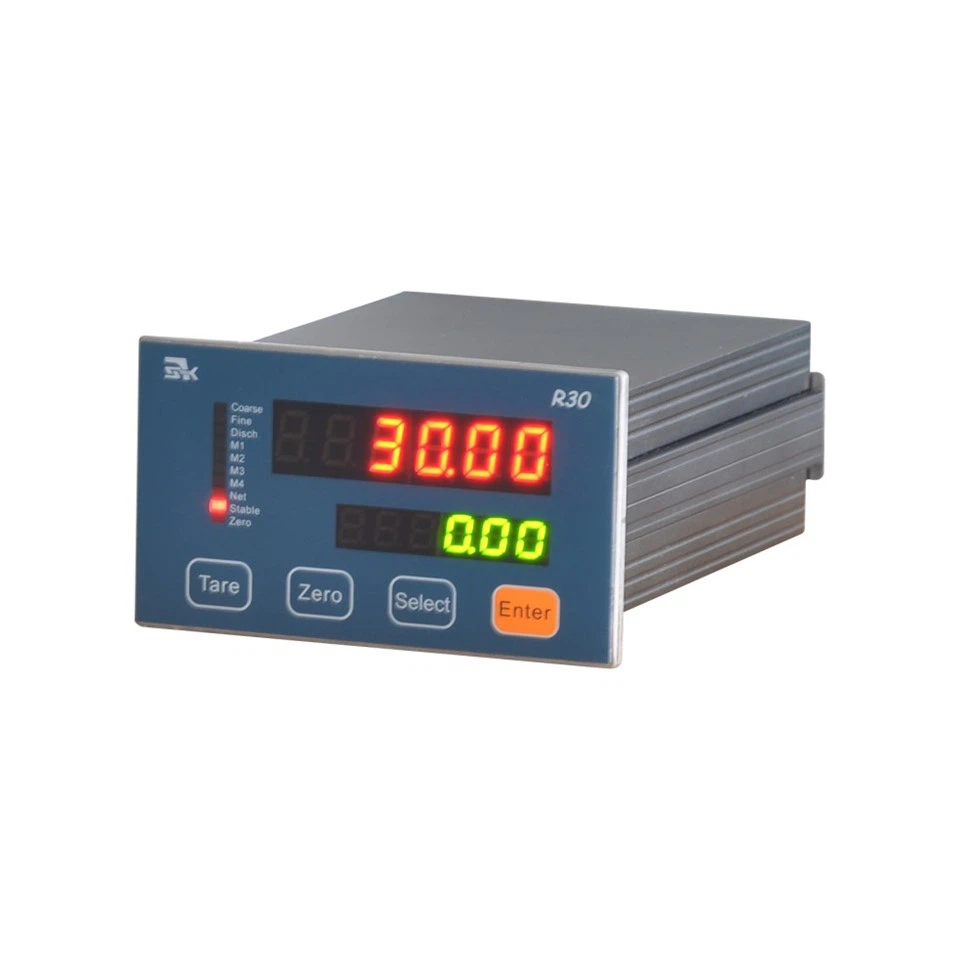
The nature of the application will place certain demands on the needs of the indicator. The simplest applications will require little more than the ability to display weight. More complex systems will require functions such as batching, data logging, analog output, tare, counting, and the capability for other user-programmed settings.
System Requirements
A digital indicator should be able to interface with all elements in the scale system. While virtually all indicators have a serial port that can interface to a printer or remote display, some indicators need additional signal conditioning in order to send data to another part of the system that can trigger a shutoff or initiate other actions in the application process. It is important that the indicator has the appropriate connections required for communication.
Environment
The physical and environmental conditions in which the scale system operates are important to consider when selecting an indicator. Factors such as temperature, humidity, dust, dirt, water, and exposure to the elements (wind, rain, sun, etc) greatly affect the life span of an indicator. Choosing an indicator with the appropriate environmental protection is the key to minimizing potential issues.
Capacity Needed
It is important to select an indicator that is able to read accurately at the highest and lowest weights required. Ideally, there should be enough display room for all required digits with one extra available digit.
Units
Most digital indicators can display results in different units such as grams, kilograms, pounds, ounces, and many more. Certain applications require particular weighing units. For instance, a scientific scale system may require the indicator to be able to toggle between ounces, grams, and newtons while a truck scale system would require pounds and kilograms.
Our Factory
In May 2017, the Ningbo Industrial Internet of Things Industrial Characteristic Park was officially settled in Keli, introducing more than 260 enterprises in eight vertical industrial chain platforms, including sensors, modules, materials, intelligent equipment, software, applications, services, and integration. At the same time, the park has won the pilot demonstration project of the national manufacturing "innovation and entrepreneurship" platform and the state-level maker space.

Ultimate FAQ Guide to Weighing Indicator and Controller
Q: How does a weight indicator work?
Q: What is the weight indicator on a drilling rig?
Q: What should I look for in a weight indicator?
Q: How do scale indicators and controllers integrate into my process?
Q: What are scale indicators used for?
Q: How accurate is a weighing indicator?
Q: What can you use the scale indicator for?
Q: What is the weight indicator?
Q: What tasks can operators accomplish with Weighing Indicator and Controller?
Q: How does a weight indicator function?
Q: What factors to consider while selecting weight indicators?
Q: What are the main components of a weighing indicator?
Q: Why use a weight indicator?
Scale indicators provide an easy way for the operator to quickly view weight data.
They can be used with a wide variety of weight sensors and load cells.
Many weight indicators have built-in features such as data storage, process control, and statistical analysis capabilities.
Indicators with the appropriate approvals can be used in hazardous environments when paired with an intrinsically safe weight sensor.
Some scale indicators can be integrated directly into process control or data acquisition systems.
Q: How do I check if a load cell has been installed correctly in a weighing system?
Q: How to install weight indicators and transmitters in a weighing system correctly?
Q: Can a weighing indicator connect to multiple load cells?