





Safety Light Curtain
Keli Sensing: Your Professional Safety Light Curtain Manufacturer!
Ningbo Keli Sensing Technology Co., Ltd. ("Keli Sensing") was established in 1995, located in the Investment and Venture Park of Jiangbei District, Ningbo City. KELI sensing is one of the major leaders in the research and development, promotion, and application of the Internet of Things in global weighing industries. KELI sensing is also one of China's important weighing component manufacturing and sales companies and one of the pioneers of the industrial Internet of Things industry.
Our Advantages
Professional Product Development
While providing professional IoT software customization services, Keli Sensing has built a "weighing equipment data center", an IoT experimental center, and 26 laboratories.
Skilled Team
The company currently has more than 2,400 employees, including more than 900 employees at the Ningbo headquarters, forming a team of skilled technical personnel with strong R&D capabilities.
Strict Production Standards
Keli organizes the production of load cells and electronic weighing instruments in strict accordance with OIML international recommendations R60 and R76. Our products have obtained OIML certificates, NTEP certificates, GOST certificates, CE certificates, etc.
Strong Industry Influence
Currently, Keli Group owns 229 patents and 192 computer software copyrights. At the same time, Keli serves as the main unit in drafting relevant industry standards, group standards, etc.




Introduction to Safety Light Curtain
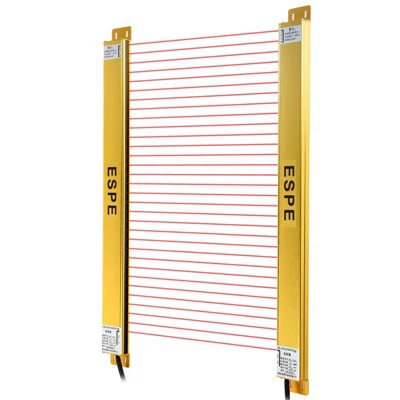
A light curtain is a safety device that detects when a beam of infrared light has been broken by a person passing through an area. Light curtains, now more commonly known as optoelectronic devices, are used to safeguard personnel in the vicinity of moving machinery with the potential to cause harm such as presses, winders and palletisers. Light curtains can be used as an alternative to mechanical barriers and other forms of traditional machine guarding.

Efficient
Light curtains offer improved visibility and ergonomics by not obstructing the view of the machine or process, enhancing operator comfort and safety. With their fast response times, light curtains ensure immediate detection and rapid safety response, minimizing accidents and reducing machine downtime. They are cost-effective, eliminating the need for physical barriers or gates and reducing installation and maintenance costs.
Convenient
Light curtains can be seamlessly integrated with other safety devices and control systems, enhancing overall light curtain safety functionality. Industries such as automotive manufacturing, packaging and material handling, CNC machining, and pharmaceutical and food processing benefit greatly from light curtains due to their flexibility, accessibility, and quick response times. These benefits enable efficient and safe operations while maintaining productivity in these industries.
Safe
A safety light curtain will not allow a machine to cycle if, for instance, an operator has an arm in the field protecting the hazardous area. Additionally, light curtains have very fast response times — fast enough to be used very close to the hazard and still stop a machine cycle if an operator breaks the protective barrier plane.
Hazards and Risks That Safety Light Curtains Protect Against
Light curtains are designed to protect against various hazards and risks in industrial environments. Specific hazards they protect against include:
Contact with Moving Parts
Light curtains can detect the presence of a person or object in the hazardous zone and trigger a safety response, such as stopping the machine or activating an alarm to prevent contact with moving parts.
Pinch Points and Crush Hazards
Light curtains can be positioned to detect the presence of body parts or objects in pinch points or areas where crushing hazards exist. They can initiate safety measures to prevent accidents and injuries.
Access to Restricted Areas
Light curtains can be used to control access to restricted areas, ensuring that only authorized personnel can enter. They can detect unauthorized entry and trigger appropriate safety responses.
Machine Start-Up During Maintenance
Light curtains can be used to ensure that machines do not start up unexpectedly during maintenance or repair work. They can detect the presence of personnel and prevent accidental machine activation.

Elevators
Light curtains are utilized in elevators to detect any obstruction in the doorway. It prevents the doors from closing on someone or something.
Industrial Automation
They are utilized on assembly lines, presses, robotic stations, and numerous other automated systems to safeguard employees from harm.
Warehouses
Light curtains assure safety at automatic gates, conveyor belts, and palletizers in warehouses.
Medical and Pharmaceutical
In specific high-speed automated pharmaceutical production or medical diagnostic equipment, light curtains can prevent injuries.
Amusement Parks
In some amusement park rides where riders' limbs could extend out of the ride, light curtains detect such incidents and halt the passage if necessary.
A photoelectric transmitter projects an array of synchronized, parallel infrared light beams to a receiver unit. When an opaque object interrupts one or more beams in the sensing field, the control logic of the light curtain sends a stop signal to the guarded machine.
The transmitter unit contains light emitting diodes (LEDs) that emit pulses of invisible infrared light when energized by the light curtain’s timing and logic circuitry. The light pulses are both sequenced – one LED is energized after another – and modulated – pulsed at a specific frequency. Corresponding phototransistors and supporting circuitry in the receiving unit are designed to detect only the specific pulse and frequency designated for it. These techniques offer enhanced safety and rejection of external light sources. The control logic, user controls and diagnostic indicators may be contained in a separate enclosure or be enclosed in the same housing as the receiver electronics.
Unlike photoelectric sensors, safety light curtains use self-checking circuitry to monitor the curtain for internal faults. If an internal fault is detected, the safety light curtain immediately sends a stop signal to the guarded machine. The light curtain then enters a lockout condition. Only after replacement of the failed component and an appropriate reset will the light curtain be restored to operating condition. Redundant safety outputs are another example of safety monitoring.
Components of Safety Light Curtain
Transmitter
The transmitter emits an array of infrared light beams across the protected area. An infrared light source, such as an LED or laser diode, generates the light beams.
Receiver
The receiver is positioned opposite the transmitter and contains light-sensitive elements, such as photodiodes or phototransistors, that detect the presence or interruption of the light beams.
Control Unit
The control unit is responsible for processing signals from the receiver and determining if any objects or individuals have entered the protected area. It typically includes a microprocessor, safety relays, and other circuitry to analyze the received signals.
Mounting Brackets
Mounting brackets are used to securely install the light curtain system in the desired location. They provide stability and ensure proper alignment between the transmitter and receiver.
Interconnection Cables
These cables connect the transmitter, receiver, and control unit, allowing for the transmission of signals and power between the components.
Alignment Aids
Alignment aids, such as alignment indicators or laser alignment tools, may be included to assist in aligning the transmitter and receiver during installation.
Integration Interfaces
Light curtain systems often include integration interfaces, such as safety relays or safety controllers, to interface with the machine’s control system and to enable safe machine stoppage or control based on a detected presence or interruption of the light beams.
● Chips, cutting oil, radiation, and noise from the machine cannot be blocked. Light curtains cannot be used if such items must be blocked. A combination of a protective door and an interlocking device (interlock switch) must be used.
● In areas with lots of steam or dust, light rays may be obstructed, or the lens of the emitter or receiver may become dirty, which could result in detection errors. The lenses may also need to be cleaned periodically. Check the installation environment carefully.
● External light, such as sunlight or strobe lights, can cause detection errors for the light curtain. Install the receiver so that the light receiving surface of the receiver is not directly exposed to external light.
● If there is a reflective wall or other object nearby, the receiver will receive the reflected light even if the light is blocked by a person or object, which could result in detection errors. Check before actual usage that no detection errors occur.

Resolution or Detection Capability
A light curtain's resolution refers to the tiniest object size it can detect. Higher resolutions (smaller number i.e. 14mm) allow for the detection of smaller objects. The slightest potential hazard should determine the key.
Range of Operation
The maximum and minimum distances a light curtain can cover. It must correspond to where you intend to install the safety light curtain.
Response Time
The light curtain's response time is crucial for safety. It refers to the rate at which the light curtain can signal to halt the machine if the light barrier is breached. It must be quicker than the machine it is protecting from stopping time.
Environment
The operating environment should be considered. For example, a light curtain with more robust protection may be required in dusty or unclean environments. Some light curtains are designed for environments with frequent washdown procedures, such as food production facilities.
Installation and Maintenance Ease
The light curtain must be simple to install and maintain. Self-diagnostic capabilities can be advantageous for equipment maintenance.
Integration with Control Systems
The light curtain must be compatible with the machine's control systems. It implies that it must be consistent with the extant systems for seamless integration.
Redundancy and Self-Checking
High-quality safety light curtains will have redundancy and self-checking capabilities to ensure they always function correctly. Industrial environments can be harsh, so you need a safety light curtain that is designed to last and is durable.
Reputation and Support of the Manufacturer
Finally, purchasing products from reputable manufacturers that provide excellent customer service and warranties is always a good idea. It ensures that you can access support if you experience any issues with the product.
Our Factory
In May 2017, the Ningbo Industrial Internet of Things Industrial Characteristic Park was officially settled in Keli, introducing more than 260 enterprises in eight vertical industrial chain platforms, including sensors, modules, materials, intelligent equipment, software, applications, services, and integration. At the same time, the park has won the pilot demonstration project of the national manufacturing "innovation and entrepreneurship" platform and the state-level maker space.

Ultimate FAQ Guide to Safety Light Curtain
Q: What does a safety light curtain do?
Q: How do safety light curtains work?
Q: What is a safety light curtain used for?
Q: What is the purpose of a safety light curtain in a robot work cell?
Q: What are safety light curtain type 2 and type 4?
Q: What is a safety grating light curtain?
Q: Are light curtains a form of guarding?
Q: How do light curtains work?
The transmitter contains multiple LEDs that send pulses of infrared light to the receiver. The pulses emit in sequence, such as from top to bottom, and each pulse releases at a specific frequency.
The receiver pairs with the transmitter to “expect” these pulses in the right sequence and timing, thereby eliminating (or nearly eliminating) the possibility of interference from other light sources.
When an opaque object passes between the transmitter and receiver, that object interrupts the reception of pulses. This interruption triggers the connected device or machinery to stop.
Light curtains differ from other photoelectric sensors in that they have self-monitoring circuitry. In the event of a fault in their operation, this circuitry sends an automatic stop signal, ensuring that the connected device will not function unless an effective safeguard is present.
Q: Safety light curtain operation: What are the installation considerations?
Operators can use light curtains to safeguard either a specific point of hazardous operation or the entire perimeter of the space defined by the movement of a machine. When compared to traditional safeguards like physical barriers, the automatic nature of light curtains makes it easier and more efficient to service machines or to perform semi-automatic operations.
Q: What are the typical applications of safety light curtains?
Perimeter guards protect the perimeter or boundary defined by a machine, robot or other equipment. In these applications, light curtains are generally selected to detect the presence of personnel and signal the machine controller to prevent hazardous conditions while personnel are present within the protected area. Also, the light curtain reset switch must be located outside and within view of the protected area to prevent inadvertent resumption of machine motion. Light curtains for perimeter guarding applications are generally selected for torso detection.
Q: What are the programmable light curtain functions?
After the physical installation of a light curtain, thought needs to be placed into the proper programming of the light curtain. Light curtains have a number of variable functions that them more appropriate and useful for different applications while still retaining safety compliance.
Restart interlocking methods are important to the use of light curtains and constitute how a light curtain system acts after something has broken the safety of the light curtain. Restart interlocking modes of safety light curtains can be set up in two ways, either automatic or manual.
Automatic restart means that as long as the light curtain does not detect an obstruction, light curtains will not give a fault to the safety system. This type of restart should only be used in applications where it is not possible for an operator or obstruction to be inside of the cell completely, such as in the hand guarding smaller machines.
The method of manual restart for light curtains involves the push of an external button to reset the safety once the light curtain has been tripped. This is the recommended method for larger cells where an operator can fit entirely inside. It ensures that the operator must be outside of the cell before it is manually restarted, and has not exited from the range of the light curtain while still inside the dangerous machine.
Muting
Muting is the process of stopping the light curtain from detecting certain objects as they travel through the light curtains zone without stopping the safety circuit. This allows necessary material to travel through the light curtain’s path while the curtain is still able to detect the presence of workers should they cross the light curtain zone.
There are many different ways to successfully mute light curtains while retaining safety for the cell. Muting is particularly important for conveyor line systems where the product needs to exit the cell through the light curtain protected area, but should certainly not cause an emergency shutdown each time an object is transported.
Blanking
Blanking is a similar process to muting, but is a more permanent configuration–completely ignoring the detection capabilities of one or more beams of the light curtain.
An example case for blanking would be a conveyor belt passing through the middle of the light curtain, but the areas above and below the conveyor still must be monitored for safety. The section occupied by the conveyor in the center of the light curtain may be intentionally blanked and not monitored by the light curtain.
Blanking can be useful in many different circumstances, but a proper safety analysis should be performed to make sure that the light curtain is still performing properly and will protect workers effectively.
Q: What to do if a light curtain stops functioning?
Do not bypass the light curtain and leave it in place! There is one thing worse than no safeguarding and that's having a safeguard in place that is not functioning. Personnel will get used to seeing the light curtains in place and believe they are functioning.
What you can do:
Of course the best solution is to have spares in stock so you can quickly swap out a broken unit with a new one. If you don't have spares and can afford the downtime, remove the light curtain and return it to the manufacturer for repair. Make sure to lock out the machine until the repaired light curtain is reinstalled and tested. If you can't afford the downtime, remove the broken system, return it for repair and then install some form of OSHA-compliant point-of-operation safeguarding in its place. This will provide the required safeguarding until the repaired system can be reinstalled.
Q: How is the minimum object resolution determined for light curtains?
Q: Once an obstruction is removed from the light curtain-sensing field, what does the curtain do?
Q: How sensitive are Safety Light Curtains to object detection?
Q: What are the light curtain applications?
Light curtains are widely used for machine guarding to protect operators from hazardous areas, such as presses, robotic cells, or assembly lines. They trigger an alarm or ensure that the machine stops if a person or object enters the protected zone.
Material Handling
Light curtains are employed in material handling applications, such as conveyor systems or automated warehouses, to detect the presence of objects or personnel in restricted areas. They help prevent collisions, jams, and accidents during material transfer.
Packaging and Sorting
Light curtains are utilized in packaging and sorting applications to detect the presence or absence of products, control the flow of items, and ensure proper positioning or alignment of packages.
Access Control
Light curtains are used for access control in restricted areas, such as clean rooms, laboratories, and hazardous zones. They allow authorized personnel to enter while preventing unauthorized access.
Robotic Safety
Light curtains play a crucial role in ensuring the safety of collaborative robots (cobots) by creating a protective zone around them. They detect the presence of humans and trigger safety measures to prevent collisions or injuries.
Q: Can Safety Light Curtains be integrated with other safety systems?
Q: Are light curtains considered machine guarding?
Q: Will the machine stop if the light intensity decreases?
Q: What is the difference between a non-safety rated area sensor and a safety light curtain?