





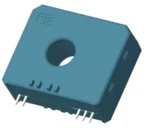
Load Cell
Keli Sensing: Your Professional Load Cell Manufacturer!
Ningbo Keli Sensing Technology Co., Ltd. ("Keli Sensing") was established in 1995, located in the Investment and Venture Park of Jiangbei District, Ningbo City. KELI sensing is one of the major leaders in the research and development, promotion, and application of the Internet of Things in global weighing industries. KELI sensing is also one of China's important weighing component manufacturing and sales companies and one of the pioneers of the industrial Internet of Things industry.
Our Advantages
Professional Product Development
While providing professional IoT software customization services, Keli Sensing has built a "weighing equipment data center", an IoT experimental center, and 26 laboratories.
Skilled Team
The company currently has more than 2,400 employees, including more than 900 employees at the Ningbo headquarters, forming a team of skilled technical personnel with strong R&D capabilities.
Strict Production Standards
Keli organizes the production of load cells and electronic weighing instruments in strict accordance with OIML international recommendations R60 and R76. Our products have obtained OIML certificates, NTEP certificates, GOST certificates, CE certificates, etc.
Strong Industry Influence
Currently, Keli Group owns 229 patents and 192 computer software copyrights. At the same time, Keli serves as the main unit in drafting relevant industry standards, group standards, etc.







Introduction to Load Cell
A load cell converts a force such as tension, compression, pressure, or torque into a signal (electrical, pneumatic or hydraulic pressure, or mechanical displacement indicator) that can be measured and standardized. It is a force transducer. As the force applied to the load cell increases, the signal changes proportionally. The most common types of load cells are pneumatic, hydraulic, and strain gauge types for industrial applications.

Beam Load Cells
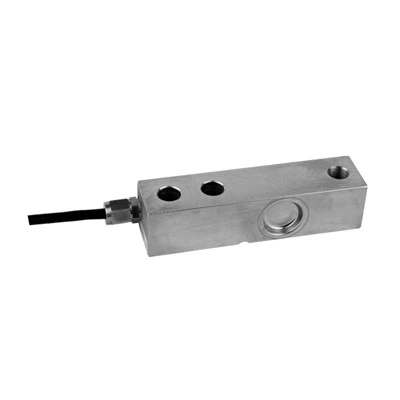
Beam load cells are commonly utilized in applications such as vessel/tank weighing and floor scales. These load cells come in three main types: bending beam, single-ended shear beam, and double-ended shear beam. The bending beam load cell is a cost-effective option and is typically suitable for lower-capacity applications. It is designed with a beam that bends when a force is applied, allowing for the measurement of weight or force. In the single-ended shear beam load cell, the load cell is mounted on one end, while the force is applied to the opposite end. This configuration allows for accurate measurements in various weighing applications. The double-ended shear beam load cell is mounted on both ends, and the force is applied to the middle of the load cell. This type of load cell is particularly well-suited for medium to high-capacity weighing requirements. It provides robust and reliable measurements, especially for higher weight capacities.
Single Point (Binocular)
Single Point (binocular) load cells are compression load cells with a lower capacity range. They are specifically designed for applications such as deli scales, bench scales, and checkweighing. These load cells are known for their moment compensation capability. The structure of the load cell body is modified, and the strain gauges are arranged in a manner that enables accurate weight measurement regardless of the load placement on the scale platform. This flexibility in load placement ensures that the load cell consistently provides precise and reliable readings. Single Point load cells are ideal for applications where weight distribution may vary or where there is a need for versatile load placement. They offer excellent performance and accuracy in deli scales, bench scales, and checkweighing applications.
Pancake (Shear Web Type)
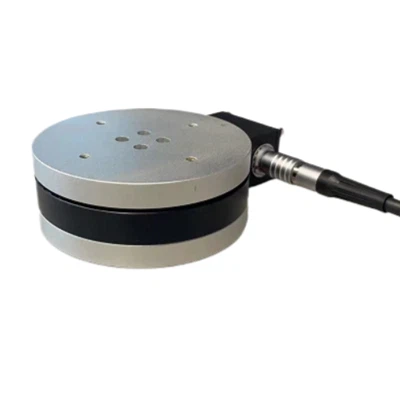
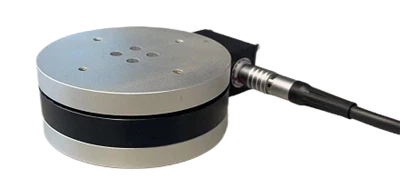
Pancake load cells, also known as shear web-type load cells, are commonly employed in manufacturing environments, particularly in car manufacturing. They play a crucial role in measuring durability and determining product failure limits during destructive testing processes. Additionally, they are well-suited for verifying force measurement in press applications. Pancake load cells are designed to be versatile in their usage. They can be sandwiched between two components to measure compression forces accurately. Alternatively, they can be used in tension applications by utilizing the threaded holes provided. Their ability to withstand high forces and provide accurate readings makes them well-suited for demanding environments such as car manufacturing and destructive testing scenarios.
Canister (Column)
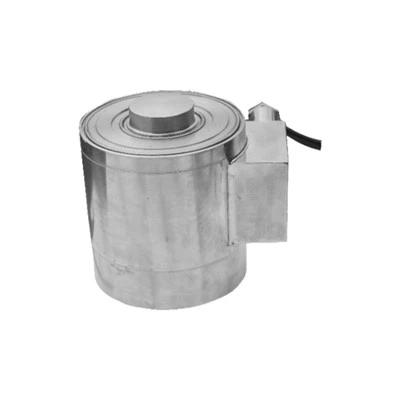
Canister load cells, also known as column load cells, have been a longstanding design in the field of load cells. This particular configuration is highly suitable for higher capacity requirements. Canister load cells excel in heavy-duty applications, notably in truck scales and railroad scales. Calister load cells are available in two variations: compression-only or tension/compression. The compression-only design is primarily intended for measuring forces in compression, while the tension/compression variant can accurately measure both tension and compression forces. This flexibility makes them well-suited for a wide range of applications. Similar to shear web load cells, certain canister load cell models are equipped with threads that enable pulling applications, providing even greater versatility in force measurement. Their exceptional performance in heavy-duty applications such as truck scales and railroad scales demonstrates their capability to handle substantial forces with precision.
S-Type
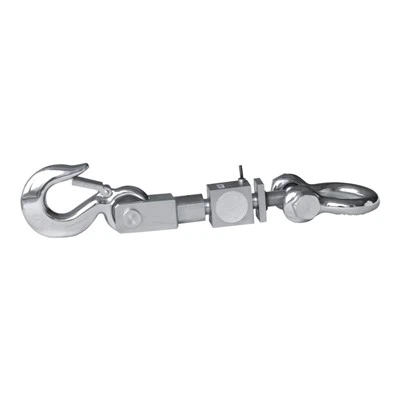
S-type load cells are commonly utilized in hanging scales or applications involving the weighing of suspended vessels. These load cells are designed to be versatile, capable of measuring both tension and compression forces. In tension applications, S-type load cells can be conveniently suspended from shackles and pulled to accurately measure the applied force. On the other hand, in compression applications, they can be mounted between two items using the provided top and bottom threads, allowing for precise measurement of compressive forces.
Load Pin
Load pin load cells are specifically designed to replace traditional pins or axles in applications where force needs to be measured. These load pin load cells offer a highly customizable design and structure, making them suitable for use in a wide range of scenarios, including those involving very high capacities. The load pin load cells serve as a direct replacement for existing pins or axles, seamlessly integrating into the system. Their customizable nature allows for precise adaptation to meet the unique requirements of each application, especially where applications require heavy loads that need to be accurately measured.
Functions of Load Cell
Industrial Weighing Systems
Load cells are integral components of industrial weighing systems, ensuring precise weight measurements for various processes such as inventory management, quality control, and shipping.
Material Testing
Load cells are used to determine the tensile, compressive, and shear properties of materials in research, development, and manufacturing processes.
Force Monitoring
Load cells enable real-time force monitoring in applications like robotics, automated machinery, and safety testing to ensure optimal performance and prevent equipment failure.
Process Control
Load cells help maintain consistent force levels in processes that require precise control, such as hydraulic press systems, extrusion lines, and assembly operations.

Deep Foundations
Tiebacks, struts, foundation anchors, soldier piles, and retaining walls use the load cell to observe compressive load and axial forces.
Tunnel Linings and Shafts
Structural members like steel linings, piles, line tunnel walls, and support beams use load cells to monitor and measure compressive load.
Dams
Concrete dams use load cells for long-run performance auditing and proof testing of tie-down anchors.
Piles
Load cells are used on pile heads to measure lateral loads and on the pile, foot to monitor the base pressure.
Borehole Extensometers
Extensometers utilise load cells to correlate data analysed for underground excavations and landslides.
Labelling and Packaging
Digital load cells are used in check weigher, batching, and filing to ensure the efficiency of the packaging system.
Load cells work by converting a specific type of mechanical force—typically tension, torque, compression, or pressure—into an output signal. This output signal is then transmitted via a load cable to the scale’s indicator where the precise weight can be measured and read by the operator. It should come as no surprise that the inner workings of a load cell will differ based on its type. While there are loads of different varieties in use today, we’re going to focus here on the three most popular types: hydraulic load cells, pneumatic load cells, and strain gauge load cells.
Strain Gauge Load Cells
Of the three, strain gauge load sensors are by far the most common and can be found in nearly every type of scale manufactured today. A strain gauge is typically constructed of a very fine wire or metal foil that’s arranged in a grid-like pattern. They can take the weight of the object acting on the load cell and convert it into an electrical signal. Most modern load cells use a wired system of four strategically placed strain gauges for maximum measurement accuracy. When an object is placed on the scale, the resistance of each strain gauge will vary, causing a fluctuation in output voltage. It’s this change in output voltage that gets measured and converted into a digital value for the scale operator to read.
Pneumatic Load Cells
Pneumatic load sensors have been increasingly popular in laboratory settings where cleanliness and safety are of utmost importance. That’s because they are incredibly stable, able to withstand extreme temperatures, and unlike hydraulic load cells, they don’t contain any fluids that could rupture and contaminate an area. When an object is placed on the scale, the pneumatic load cell uses a pressure gauge to measure the displacement of a pressurized gas (typically air) within an internal diaphragm. The heavier the object, the more the diaphragm will be deformed, causing more air to escape through a nozzle on the other end of the load cell.
Hydraulic Load Cells
Because hydraulic load sensors are entirely mechanical and contain no electric components, they have found plenty of use in industrial and hazardous applications such as bin, tank, and hopper weighing. Hydraulic load cells work in a very similar way to pneumatic sensors, with the main difference being their use of an oil or another filling fluid in lieu of pressurized air. When an object is placed on the scale, that force is transferred to a piston that immediately begins compressing the oil. Heavier objects create additional pressure in the fluid-filled diaphragm chamber. This change in pressure is measured by a hydraulic pressure gauge which then converts that reading and registers it on an external dial for the operator to record.
Considerations Before the Installation of Load Cell
Types of Installations
In addition to typical installations of hydraulic, pneumatic, and strain gauge types of load cells, customers often ask about bending beam load cells, shear beams, canister type, ring and pancake load cells, and button and washer type load cell installations. Some other more advanced types of load cell installations for specific uses include helical, fiber optic, and piezo-resistive types of load cell installations.
Load Orientation
Service technicians find the most common cause of accuracy problems with load measurements is incorrect load cell mounting which results in imprecise vertical loading that creates extraneous force errors. The loads must act precisely in the direction of the load cell.
Environment
Magnetic and electrical fields can sometimes create interference voltage within a measuring circuit. To ensure protection from EMC, place the load cell, connection cabling, and electronics in a shielded housing. Do not ground the indicator, load cell amplifier, and transducer more than once.
Framework of Structure
Protect the measurement cable using steel conduits. Use shielded, low-capacity measurement cables such as HBM cables. Avoid stray fields from motors, contact switches, and transformers. Using a rigid design for the support structure of load cells in compressive loading applications, preferred to pliable designs, to achieve even/balanced lowering of all supports that also distribute tension, and provide an even contact surface. Mounting load cells to the support structure, and rigid base plate, ensures even load transfer from the base of the load cell to the support structure. This structure must also have the capacity to support the forces corresponding with the load.
Today’s mechanical scales can weigh loads of all kinds, from pharmaceuticals to tanks and shipping cars. Consistency of weight calculations and readings requires the best weight balancing mechanism designs engineered to sense force, proper calibration, and maintenance. Depending on the output signals generated, we distinguish load cell designs according to weight detection, such as tension, compression, bending, or shear, for example. Strain gauge load cells convert on acting loads into electrical signals. The change in pressure of internal filling fluid measures weight using force balancing devices in hydraulic load cell designs. Higher accuracy requirements can be achieved using multiple dampener chambers which also operate on the force balance concept with pneumatic load cell engineering.
Using Tips for Load Cells


Selection
Choose the appropriate load cell based on the specific requirements of your application, such as the maximum load capacity, sensitivity, environmental conditions, and desired accuracy.
Mounting
Install the load cell properly to ensure accurate measurements. It is usually mounted between the load source and the support structure. The load should be applied in a way that aligns with the load cell's intended direction of measurement.
Wiring
Connect the load cell to a suitable signal conditioning instrument or system. Load cells typically have multiple wires that need to be connected to a power supply and instrumentation for data acquisition.
Calibration
Calibrate the load cell to establish a relationship between the electrical output and the actual force or weight being measured. Calibration involves applying known loads and recording the corresponding electrical output. This information is then used to create a calibration curve or equation that relates the electrical signal to the applied load.
Measurement
Once calibrated, the load cell can be used to measure forces or weights. The load is applied to the load cell, and the corresponding electrical signal is converted into a measurable quantity, such as weight or force, using appropriate instrumentation or data acquisition systems.
It's important to note that load cells should be used within their specified range to ensure accurate and reliable measurements. Additionally, proper maintenance and periodic calibration checks are essential to maintain the performance and accuracy of the load cell over time.
Understand Your Application
Look for a load cell based on the application in question.
High Endurance Applications: For usage in an industrial setting and usually involving experimental stress. In this instance, a strain gauge load cell may be best.
Remote Applications: If the scale is in a remote setting, a hydraulic load cell could be ideal. These load cells can operate without a power connection.
Quality Assurance and Safety Applications: Pneumatic load cells deliver precise mechanical balance. This might be required for something like ensuring whether or not an IV bag is dispensing correctly or is in need of replacement.
Look into Your Capacity Requirements
Determine the maximum and minimum load capacity needed for your application. To make sure you have the optimal capacity, go for a load cell that exceeds your highest operating load. Also, consider the extraneous factors the load cell will be subjected to. For instance, if you use load cells in a high-endurance setting, look for a load cell with the right fatigue rating. To ensure you have the optimal load cell capacity, consider possible variances that could arise like nonlinearity, bridge resistance, and hysteresis.
Size and Specification Requirements
Look into the size requirements of the load cell. Determine the needs of your application along the lines of:
● Height and width
● Length
● Weight
Load Cell Types
Strain Gauge Load Cell: Popular for its durability, stiffness, and resonance values.
Piezoelectric Load Cell: The piezoelectric matter in the load cell generates a voltage in response to the changing form of the load cell.
Hydraulic Load Cell: It can be safely used in hazardous environments due to the absence of electrical parts.
Pneumatic Load Cell: It is made to control the balance of pressure.
Load Cell Shapes
S-Beam Load Cells: Used mainly in applications involving tension.
Beam Load Cells: These can be used for static weighing, dynamic weighing, silo weighing, hopper weighing, and tank weighing.
Canister Load Cells: A popular choice for compression applications with capacity requirements of 100,000 lbs. or more.
Pancake Load Cells: Used in applications that require high precision.
Button Load Cells: Ideal for applications in confined and narrow settings. Quite popular in the medical sector.
Thru-Hole Load Cells: Designed for high stiffness and they give highly accurate results in press-load and off-centre applications.
Consider the Operating Environment
Consider whether the load cells will be operating in hot or cold temperatures. Check if the environment is adverse, rugged, corrosive, dry, or damp. This knowledge will help you choose the right load cell for the location.
Our Factory
In May 2017, the Ningbo Industrial Internet of Things Industrial Characteristic Park was officially settled in Keli, introducing more than 260 enterprises in eight vertical industrial chain platforms, including sensors, modules, materials, intelligent equipment, software, applications, services, and integration. At the same time, the park has won the pilot demonstration project of the national manufacturing "innovation and entrepreneurship" platform and the state-level maker space.

Ultimate FAQ Guide to Load Cell
Q: How do load cells work?
Q: How does a strain gauge-based load cell work?
Q: What is the difference between a load cell and a force sensor?
Q: Where are load cells found?
Material Testing: They are critical in material testing machines, ensuring precise force measurement during tensile, compressive, or fatigue testing.
Q: How do you measure force without a load cell?
Q: How does a strain gauge load cell work?
Q: How do you measure weight with a load cell?
Q: How accurate is a load cell?
Q: Is a load cell analog or digital?
Q: How many wires does a load cell have?
Q: What is inside a load cell?
Q: How do you know if a load cell is bad?
Q: How do you place a load cell?
Q: Do load cells go bad?
Q: How do you troubleshoot a load cell?
Verify the operating temperature is within the specified range for your load cell.
Check for excessive vibration or shock that might be affecting the readings.
Ensure the environment is free from dust, moisture, and other contaminants.
Q: Are load cells fragile?
Q: Where are load cells located in a scale?
Q: How often do scales need to be recalibrated?
Q: What is the design of Load Cells?
Strain gauges are very small and measure the strain of an object by converting internal deformation into an electrical signal that precisely measures the weight, force, tension, or strain. The sensing element can also be piezoelectric sensors that are electroacoustic transducers that convert electrical charges from different materials. With a strain gauge, an electrical conductor is attached to a film. When the film is pulled, it gets longer and gets shorter when it contracts. The changes in elongation and contraction create resistance in the conductor. As the film lengthens, the strain increases resistance. When the film contracts, resistance lessens. The resistance is what a load cell converts into digital readings.
The types of load cell outputs include analog voltage, current, frequency, switch or alarm, serial, and parallel. Basic designs of load cells have four gauges, while complex load cells, such as Wheatstone bridges, can have up to thirty gauges for measuring circuits. The more gauges a load cell has, the more sensitive its measurements are.
When determining the capacity of a load cell, manufacturers examine force value, the dynamics of the system, the effects of placing the transducer in the force path, and the maximum extraneous loads that the load cell can handle.
For a load cell to perform properly, all loads or forces should be sent directly through it. The issue of directionality is crucial to receiving proper and precise readings. Physical constraints include size, mounting or frame, the level of accuracy, vibrations, and environmental conditions. Assessing these factors ensures that a load cell will perform properly.
Q: What is the preventive maintenance for load cells?